Flying Dragon Embroidery Design: Business Patch Review
When you run a small business that sells handmade goods, runs a cozy café, or runs a boutique studio, every visual detail tells a story. As an embroidery designer who has digitized and tested hundreds of files for commercial use, I look at a machine embroidery design like Flying Dragon through a very specific lens. I ask one question first: can this design become a dependable, repeatable brand asset that elevates merchandise and builds customer trust? The answer for Flying Dragon is a careful “yes,” with a few notes you’ll want to read before stitching it onto uniforms, tote bags, or patches.
First Impression: A Whimsical Asset with Brand Potential
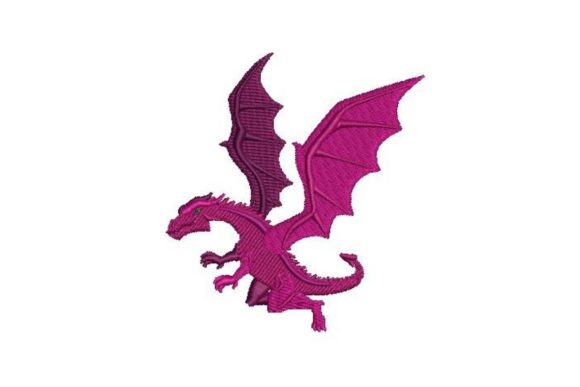
Flying Dragon lands right away as a design from the Fairy Tales category, and that storybook quality is its biggest strength. The description mentions creating a wonderful magic scene for kids, so I expect a cute, friendly dragon—not a fierce one. The posture likely suggests flight, maybe with spread wings and a cheerful expression. For a brand that wants to feel approachable, imaginative, and handcrafted, this is the kind of design that softens a logo or adds charm to packaging. I would not slot it into a corporate uniform, but I would absolutely test it for a children’s bookstore, a toy shop, a bakery with a playful name, or a pet brand that uses fantasy mascots.
From a purely visual standpoint, Flying Dragon sits on the line between decorative illustration and functional emblem. If it’s designed with clean outlines and balanced stitch areas, it can translate into a crisp embroidered patch without turning into a puffy, heavy mess. But I always remind small business owners: a design that looks gorgeous as a digital embroidery file on screen still has to prove itself on twill, denim, canvas, or ribbed caps.
Business Applications: Where Flying Dragon Takes Flight
In my studio, I mentally map every new embroidery file onto real-world products. Flying Dragon immediately feels like a patch design. Most of my clients who run Etsy shops, craft fairs, or branded merchandise lines want patches they can sew onto beanies, backpacks, jean jackets, or tote bags. A flying dragon shape, especially if the wings extend slightly outward, creates a dynamic silhouette that stands out without needing a background fill.
Here are the strongest business uses I see:
- Chest logo accent on staff aprons for a fantasy-themed café or bakery. A small 2.5-inch-wide application on the left chest adds a handmade, personal touch that a printed logo can’t match.
- Sleeve detail on work shirts or lightweight jackets. The vertical movement of a flying dragon works with the arm’s natural line, making it a subtle but endearing detail for a boutique employee uniform.
- Cap embroidery on the front panel. This one needs testing because curved surfaces hate heavy stitch counts, but a properly digitized Flying Dragon with moderate density could become a signature cap for a creative studio, florist, or outdoor event merch.
- Tote bag mark in the corner, replacing a standard logo. Using Flying Dragon on canvas totes gives customers a reusable bag that feels like a gift, not just a shopping carrier.
- Product packaging accents—think a small embroidered tag sewn onto handmade plush toys, fabric gift wraps, or reusable produce bags. It elevates the unboxing experience for craft businesses.
- Customer gifts and event merch. A standalone embroidered patch of Flying Dragon, backed with iron-on adhesive, becomes a low-cost, high-perception giveaway at pop-ups or brand launches.
I wouldn’t force Flying Dragon onto formal uniforms or sleek corporate apparel. Its strength lies in brands that already embrace a whimsical, story-driven identity. If your business name has words like “magic,” “wonder,” “dream,” or “fairy,” you’ve found a design that visualizes that language in thread.
Patch Performance and Size Considerations
An embroidered patch lives or dies by how it reads at small sizes. From my experience, Flying Dragon needs careful size management. The description doesn’t give exact stitch counts or dimensions, so you must test it at the actual patch size you intend to produce. Here’s what I’d check:
- Under 2 inches: If the design has fine wing details, tiny claws, or facial features, they could blur together or become unrecognizable. Ask yourself if the dragon still reads as a dragon from arm’s length. If not, you may need to go larger or simplify the artwork before stitching.
- 2 to 3.5 inches: This is the sweet spot for most patches. Flying Dragon likely shines here, especially if the digitizer balanced the stitch density well. The wings can unfold, the body stays light, and the overall emblem doesn’t become a stiff patch that puckers the fabric.
- Over 4 inches: If you’re stitching this onto the back of a jacket or a large tote panel, you’ll want to consider stabilizer weight and running stitch underlay. A large design can still look professional if the fill patterns break up solid areas enough to let the fabric breathe.
Always request or create a sewn sample before committing to a production run. I’ve seen too many beautiful digital embroidery files turn into heavy, misregistered patches because nobody tested them on the actual fabric first.
Brand Identity and the Magic of a Mascot
Flying Dragon isn’t just decoration. When you place it on your products, you’re building a brand asset. In the Fairy Tales realm, a cute dragon implies imagination, warmth, and a touch of nostalgia. For a small business, that can translate into several benefits:
- Customer trust: A consistent embroidered emblem signals attention to detail. When a customer sees Flying Dragon on an apron, a tote, and a patch, they connect those items to a single, put-together brand.
- Recognition: Over time, the dragon becomes a visual shortcut for your business. Even without your company name, returning customers might spot the flying silhouette and know it’s you.
- Product value: Embroidery inherently feels premium. A stitched Flying Dragon on a simple cotton tote can justify a higher price than a blank bag. Handmade brands, especially, can use this to move out of the “cheap craft” zone and into boutique territory.
- Professionalism with personality: Many small businesses struggle to look professional without looking boring. A design like Flying Dragon gives you a professional finish (because embroidery is crisp and durable) while keeping the personality that made you start the business in the first place.
If you run a pet brand, a florist, a bakery, or a children’s boutique, the dragon can become a mascot without needing a full character backstory. Just a consistent placement—left chest, right sleeve, or patch corner—and suddenly your packaging and staff uniforms feel like a collection.
Practical Embroidery Notes for Production
As an embroidery designer, I never assume a file is production-ready just because it looked good in a preview. Here’s the step-by-step checklist I’d run for Flying Dragon before dropping it into any client order:
- Test in black and white first. Stitch a one-color version on scrap cotton. If the design still reads clearly without color, the digitizing foundation is solid. Color changes can then be layered with confidence.
- Check thread color contrast. A cute dragon might have multiple shades in the wings or body. On light fabric, pastels could wash out. On dark fabric, deep greens or purples might get lost. Always test on the exact fabric color you plan to use.
- Inspect stitch density and pull. Run the file on a similar weight fabric with the appropriate cutaway or tearaway stabilizer. Look for puckering, especially around thin wing sections. Dense fills on soft fabric spell disaster.
- Confirm the hoop size. The product description doesn’t specify a required hoop size. Check the downloaded file dimensions and make sure they fit your machine’s maximum embroidery field. A flying dragon with wide wings might eat up more horizontal space than you expect.
- Verify all file formats. The listing says it comes with multiple embroidery file formats, but the sentence cuts off. Before buying, confirm that your machine’s format—PES, DST, EXP, JEF, VP3, etc.—is included. Nothing frustrates a business owner more than receiving a file they can’t open.
- Create a printable mockup for client approval. Even if you’re your own client, seeing Flying Dragon placed on a digital image of your cap or apron prevents costly re-dos. I always offer a quick mockup before the first stitch.
- Test on real fabric—not just hooped cotton. Stitch it on the same piqué knit you use for polos, the canvas for totes, or the structured front of a cap. Behavior changes, and you’ll spot registration issues early.
- Confirm commercial licensing. If you’re using this design on items you sell, make sure the licensing terms allow commercial embroidery and merchandise production. The description doesn’t cover this explicitly, so I’d reach out to the seller if you plan to stitch it on dozens of products.
Where to Use Flying Dragon with Caution
Not every blank screams for a flying dragon. In my experience, these are the scenarios where you should pause and test more thoroughly before going live:
- Very small patch placements (under 1.5 inches). Intricate wing details may disappear, turning the dragon into an unidentifiable blob. If you need a tiny accent, consider removing some internal detail in editing software first.
- Highly textured or heavily washed fabrics like fleece, slub linen, or terry cloth. The stitch definition can suffer, and fine outlines might sink into the pile. A heavier underlay or a switch to a simpler version would help.
- Dark uniforms with low-contrast thread. If you must use a dark thread on black fabric, the dragon might vanish. Always push the thread colors up a shade or two brighter than what you think you need.
- Frequent industrial washing (think restaurant aprons). Make sure you use polyester thread and proper backing, but also check that the design doesn’t have small, loosely connected areas that could snag. Flying Dragon, if it has delicate wing tips, could be a snag risk. A poly patch sewn on separately might outlast direct embroidery.
- Curved cap fronts with heavy stitch counts. A dense dragon will cause the cap to pucker. If you plan to use this on caps, see if the file can be edited to reduce stitch density or if the digitizer already optimized it for structured hats.
Final Verdict: Is Flying Dragon Ready for Your Brand?
Flying Dragon brings a cute, storybook energy that many small businesses need right now. It’s not a generic icon; it’s a deliberate character that can transform an embroidered patch, cap, apron, or tote bag into a conversation starter. From my side of the embroidery machine, the design holds real potential, but it does ask you to be thoughtful. Test sizes, confirm your file format, and don’t assume it will work on every fabric without adjustment.
If your brand leans into Fairy Tales, handmade charm, or a playful connection with customers, Flying Dragon could be the thread-and-needle asset that makes your merchandise unmistakably yours. Just stitch a sample first, and you’ll know quickly if this dragon is ready to fly off your shelves.