Angry Unicorn: A Sassy Embroidery Design for Branded Merch
There are designs that whisper, and then there are designs that stomp their hoof and demand attention. The Angry Unicorn machine embroidery design falls firmly into the second camp. As someone who has digitized, tested, and stitched hundreds of embroidery files for small business clients, I’ve learned that a great mascot design needs personality that translates from a computer screen to a thread-covered finished product. This sassy, angry, yet entirely cute unicorn has exactly that energy. But how well does it hold up when you’re using it for real commercial embroidery on aprons, caps, tote bags, or branded staff uniforms? That’s the question I set out to answer.
Before you buy any digital embroidery file, especially one destined for customer-facing small business merch, you have to look past the cute render and imagine it stitched on a curved cap crown or a textured work shirt. I’ll walk you through where Angry Unicorn could become your brand’s secret weapon, where you need to be cautious, and what every crafter, apparel decorator, and handmade brand owner should know before hooping up and pressing start.
First Impressions: Attitude Meets Playful Charm
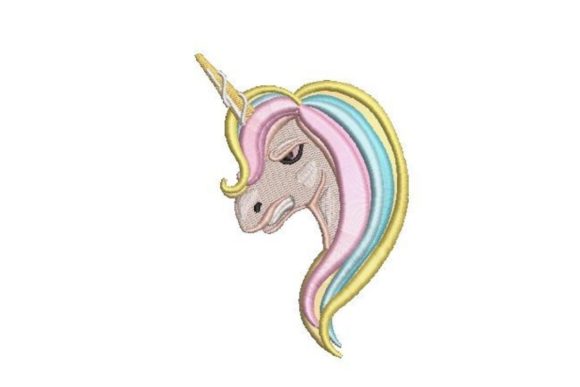
The title says it all—angry yet cute. From the product description, “sassy and angry, this cute unicorn embroidery will make your designs seem out of this world,” I immediately picture a stylized unicorn head with a furrowed brow, maybe a side-eye glare, and a slightly pouty mouth. It borrows from the Fairy Tales category but twists it into something thoroughly modern. This isn’t your daughter’s gentle pastel unicorn; this is a design asset with an edge. For a business, that edge can be a powerful differentiator.
What struck me first is how this design could bridge aesthetics—whimsical enough for a handmade product lineup, bold enough for a streetwear drop. It leans decorative yet confident. I’d classify its visual personality as playful-assertive. If your brand voice is sassy, humorous, or unexpectedly bold (think a coffee shop with sarcastic cups, a pet bakery named “Bad to the Bone,” or a boutique that sells “nice to meet you, I’m awkward” totes), Angry Unicorn will feel like it was custom digitized for you.
Business Potential: Where Angry Unicorn Shines
Let’s move from screen to real-world business needlework. I evaluate every machine embroidery design by asking: can I actually use this across a small product ecosystem? With this particular file, the answer is a resounding yes, as long as you play to its strengths. Here’s where the design truly earns its keep.
- Embroidered patches. This is the first thing I’d do. Digitize or modify the design into a patch format with a merrow border. An embroidered patch of the angry unicorn on denim jackets, backpack straps, or beanie fronts becomes an instant conversation starter. For a handmade business or Etsy brand, selling limited-run patches can boost average order value and strengthen brand identity.
- Apron embroidery for food and pet businesses. Picture a bakery named “Crust Me, I’m Magic” or a dog treat brand called “Bad to the Bone Bites.” A small chest-level apron embroidery of the angry unicorn gives staff a unified look that’s memorable and photographable for social media. It transforms a plain apron into a brand asset.
- Cap embroidery. Cap embroidery often fails when designs have too much detail near the center seam or when stitch density fights the cap’s curved surface. The key with Angry Unicorn will be placement—off-center on a dad hat or the front panel of a structured cap could work brilliantly, provided size and stitch count allow.
- Tote bag design. A large, single-color or limited-thread-color version of the angry unicorn could become a signature tote bag design for boutiques, craft markets, or bookshop merch. Even a smaller accent near the gusset or a corner placement adds enormous perceived value to an otherwise generic bag.
- Work shirts and uniforms. Small businesses eager to escape the sterile polo shirt trap can stitch the design as a sleeve accent, collar point detail, or upper back sign-off on denim work shirts. It keeps uniform pieces feeling like staff exclusives, not corporate handouts.
- Customer gifts and packaging accents. For a florist or creative studio, the design could be stitched onto fabric gift wraps, reusable bag labels, or even woven into ribbon tags. It turns packaging into a collectible.
Every scenario above feeds back into one goal: making your small business merch feel intentional. It’s not just a logo slapped onto a shirt—it’s a character that tells a story.
When to Use Angry Unicorn with Caution
No design is limitless. My responsibility as a commercial embroidery consultant is to flag exactly where Angry Unicorn could stumble so you can avoid costly do-overs.
- Extremely small patch sizes. If your intention is a 1.5-inch patch, expect the fine facial details—the eye, the mane spikes, the nostrils—to close up. Test a stitch-out at your target size before ordering a thousand units.
- Dark fabrics with low-contrast thread. The design’s mood may vanish if you choose black thread on a charcoal shirt. Always review thread colors with high contrast against the fabric, and test on the darkest background you plan to use.
- Cap foreheads with a heavy seam. Structured caps have a reinforced center seam. A dense, symmetrical design placed directly over that seam can cause registration issues and needle breaks. Look for off-center placement or test on low-profile caps first.
- High stitch density on lightweight knits. If the file leans dense, a thin t-shirt could pucker. Use a quality stabilizer and consider reducing density (if you have editing capabilities) for garment-friendly results.
- Items needing frequent industrial washing. Kitchen uniforms and aprons in food service go through harsh cycles. Without proper backing and thread choice, a detailed design could wear faster. Emphasize durability thread and a permanent press stabilizer for such use.
- Tiny lettering if included. The description doesn’t specify text, but if an alternate version adds “sassy” script, never trust it below 0.25 inches without a real test. The same goes for any intricate unicorn horn lining.
One of the most important rules I pass to fellow embroidery studio owners: run your first stitch on the exact fabric and layering you’ll sell. That means testing Angry Unicorn on a tote bag canvas or a polo pique, not just on a flat quilting cotton that hides every flaw.
Brand Identity, Trust, and Recognition
A single embroidery design can reshape how customers perceive your brand. When you choose Angry Unicorn, you’re choosing personality over blandness. That’s a strategic move. Boutique shoppers today hunt for handmade product cues: a distinctive chest emblem, a quirky mascot peeking from a sleeve, a patch that no big-box store carries. This design signals originality. It tells a customer, “These folks don’t take themselves too seriously, but they take their craft seriously.”
For an Etsy seller or craft business, consistent use of the angry unicorn across product photography, package inserts, and embroidered labels creates a powerful visual thumbprint. It turns a one-time buyer into someone who actively looks for that little angry face on your next collection. This is the power of branded embroidery: it moves brand identity from a static logo to a living, stitched signature.
From a buyer psychology standpoint, an unexpected character design adds whimsy that drives word-of-mouth. Imagine your café staff wearing an apron with the angry unicorn, and a customer posts it online asking where they can get one. That’s engagement you cannot buy with a plain font logo.
Of course, this design will not suit every brand. A high-end law firm or a luxury jeweler might find it distracting. But for makers, creatives, and product designers building a brand rooted in personality, Angry Unicorn is the kind of custom apparel accent that creates instant recognition and emotional connection.
Designer’s Technical Checklist: From File to Finished Product
Before you hit “add to cart” on any digital embroidery file, I recommend a clear-headed checklist. Having digitized and corrected hundreds of designs for commercial embroidery purposes, I guarantee a few extra minutes of checking will save hours of grief later.
- Print the design sheet in black and white first. If the angry expression and silhouette remain readable without color, you’ll know the design has strong bones. If it blurs into a gray puddle, you may need to adjust contrast or skip it for very small renderings.
- Confirm the hoop size it requires. The product description doesn’t list an exact hoop size, but you’ll need to check. For chest logos, under 4x4 inches is ideal. For full back embroidery, something larger. Always measure against your intended garment panel.
- Inspect stitch density and underlay. If the design is overly dense, even a sturdy denim jacket can turn stiff. Ask the designer or check the preview for density warnings. Adjust if your software allows.
- Review thread color palette. Count the colors. If you plan to run this on a single-needle machine, 6 colors might still be manageable. For multi-head commercial runs, too many color changes slow production. Simplify where you can while keeping the unicorn’s sass intact.
- Check the file format list. The description mentions the design “comes with mul.” This likely means multiple design variations or multiple machine formats. Verify you’re getting the format your specific machine needs (DST, PES, EXP, etc.) before purchase. Without that confirmation, you risk buying an embroidery file you can’t use.
- Test on real fabric with proper stabilizer. Match your test to the final substrate: denim, canvas, pique knit, performance polyester. Use cut-away stabilizer for knits, tear-away for wovens when appropriate. This reveals registration shifts and underlay issues early.
- Create a printable mockup for client approval. If you’re a custom apparel decorator or Etsy seller, mockups sell the idea. Drop the angry unicorn onto a digital hoodie, cap, or tote mockup so customers can see scale and placement. A printable mockup with the design previewed reduces refunds and builds trust.
- Compare it beside other design assets. If you’re using Angry Unicorn alongside a wordmark or secondary icon, test them side-by-side. The styles need to feel like a family, not a garage sale.
- Confirm commercial licensing and usage rights. Not every design comes with broad commercial terms. Before stitching it on items you intend to sell, verify that the license allows commercial embroidery production. The listing details should clarify this, and if not, ask.
Throughout this review, I’ve intentionally avoided guessing exact stitch count or file specifics because the published product information doesn’t include them. That’s absolutely fine—so long as you do your own due diligence. The same level of care applies to hoop size constraints and the number of included formats. A little investigation upfront means the finished product on your customer’s jacket or tote bag will look exactly as bold and sassy as the design promises.
Final Thoughts: A Design That Means Business
After evaluating Angry Unicorn from a stitch technician’s and a brand strategist’s perspective, I’m convinced it holds genuine commercial potential for the right small business. It’s not a universal fit—few designs are—but for any brand that thrives on playful rebellion, sarcasm, or whimsy with a bite, this machine embroidery design fills a gap that generic florals and geometric shapes never can. Use it on caps for your pet bakery, aprons in your quirky café, patches for your fleeting seasonal drops, or as the signature mark on every handmade product you ship.
Treat the technical side with respect, test thoroughly on your intended fabrics, and don’t forget that even a sassy unicorn deserves a well-chosen stabilizer and the right fabric texture. When those threads lock tight and the little angry face emerges from the hoop for the first time, you’ll know whether it feels like your brand. If it does, stitch it everywhere.