Christmas Sayings for Craft Fair Embroidery Success
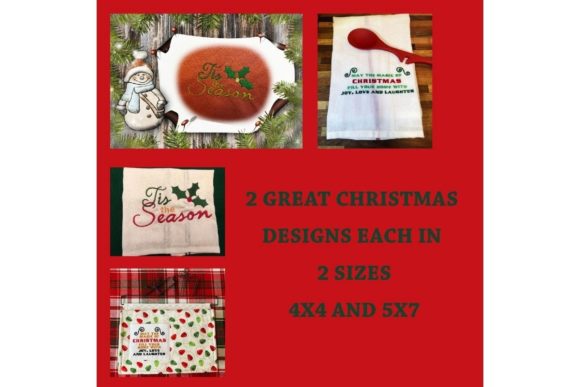
As an embroidery designer preparing for a busy holiday craft fair season, I’m always looking for designs that translate into reliable, profitable products. Today, I’m reviewing a design simply titled Christmas Saying. The description tells us it features two great Christmas sayings suitable for aprons, towels, t-shirts, and more, and comes in multiple embroidery file formats for various machines. Let’s break down its potential from a maker’s perspective.
First Impression: Festive and Versatile
The title Christmas Saying suggests a focus on text-based sentiment. This immediately feels festive, traditional, and wonderfully versatile. In my experience, sayings and quotes have a strong emotional pull at holiday markets—they’re often purchased as gifts because they convey a specific, warm feeling. This isn’t a minimalist modern design; it leans into the classic, cozy, and possibly rustic charm that shoppers seek during Christmas. The fact that it includes two different sayings is a huge bonus, offering variety within one purchase and allowing for batch production without monotony.
Where This Design Stands Out on the Booth Table
Imagine my display: a mix of embroidered tote bags, aprons, tea towels, caps, and small pouches. A text-based Christmas Saying needs to be placed on items where the words are easily readable and make contextual sense.
- Aprons and Kitchen Towels are prime candidates. A festive saying on a linen towel or a chef’s apron screams “holiday cooking” and sells incredibly well as a practical, decorative kitchen gift.
- Tote Bags and Market Bags offer a larger canvas. A bold saying here can become the focal point of the bag, making it a standout accessory for carrying holiday purchases.
- Pillow Covers provide a home decor angle. A well-placed saying on a pillow can anchor a cozy living room display in your booth.
- Embroidered Patches are a clever, lower-cost option. They can be applied to many surfaces, appealing to customers who want to customize their own items.
The key is to create at least one real, physical mockup for each of these top product categories. A tea towel embroidery sample, hung visibly on my booth, will draw immediate attention. Customers “see” the finished product and can imagine it in their home.
Practical Production for the Handmade Business Owner
Turning a digital embroidery file into a sellable craft fair product requires careful planning. Here’s my practical evaluation for production.
Design Scalability and Clarity
With a design based on sayings, the clarity of the lettering is everything. Before running any batch, I must test this on scrap fabric.
- Check the stitch density for small lettering. Too dense on thin fabrics like tea towels can cause puckering; too sparse on textured towels like terry cloth might look incomplete.
- Test at different sizes. Does the design retain its charm and readability when stitched small (for a cap or pouch) versus large (for a tote bag)? Some script styles lose clarity at smaller hoop sizes.
- Thread contrast is critical. On dark fabrics—popular for holiday items—I’ll need bright, possibly metallic threads to make the saying pop. On light fabrics, classic reds, greens, and golds will work.
Batch Production and Efficiency
For a weekend fair, I need products I can produce efficiently. Christmas Saying seems promising here. Two sayings means I can alternate them on a batch of towels, creating variety without designing two separate files. The mention of multiple embroidery file formats is essential—I must confirm the included formats work with my machine before starting. A design that hoops easily, uses a manageable number of thread colors, and has sensible stitch spacing allows me to produce more units with less downtime.
Photography and Online Sales Potential
For my Etsy listings or online shop, how this design photographs matters. Text-based designs on textured fabrics like linen photograph beautifully, conveying a tangible handmade quality. I’d create printable mockups for quick listing images, but the real value comes from photos of the actual embroidered towel or apron in a festive setting. The saying should be legible in the photo, immediately communicating its message and appeal.
Careful Use Notes for a Professional Finish
Every design has its quirks. As a professional, I approach new files with a checklist.
- Stabilizer Choice: For the likely products (towels, aprons, bags), a medium-weight cut-away stabilizer will often be necessary for clean stitches on more flexible fabrics.
- Fabric Texture: Embroidering on curved surfaces like caps requires extra stabilization and possibly testing the design placement to avoid distortion of the saying.
- Commercial Licensing: The description doesn’t specify license terms. Before selling any finished product, I must verify that the digital embroidery file comes with a commercial license for my small shop product sales.
- Hoop Size Guidance: The description doesn’t list recommended hoop sizes. I’ll test in a common mid-size hoop (like 5x7) for towels and aprons first, then assess if a smaller or larger hoop is better for other items.
Maximizing Customer Engagement and Booth Appeal
At the fair, the product needs to engage buyers quickly. A well-executed Christmas Saying on a simple product does this.
- It adds perceived value. A beautifully embroidered saying transforms a basic towel or apron into a thoughtful, premium gift.
- It creates brand consistency. If my booth has a cohesive “holiday warmth” aesthetic, these saying-based products reinforce that theme.
- It sparks conversation. Customers often read the sayings aloud, smile, and connect emotionally—this is a direct path to a sale.
The final step is display. I won’t just lay towels flat. I’ll hang an embroidered apron on a stand, stack towels with the saying clearly visible, and maybe even have a small pillow cover propped up. The goal is to let Christmas Saying do its job: speak directly to the holiday spirit in my customers, making my handmade products the obvious choice for their festive needs.