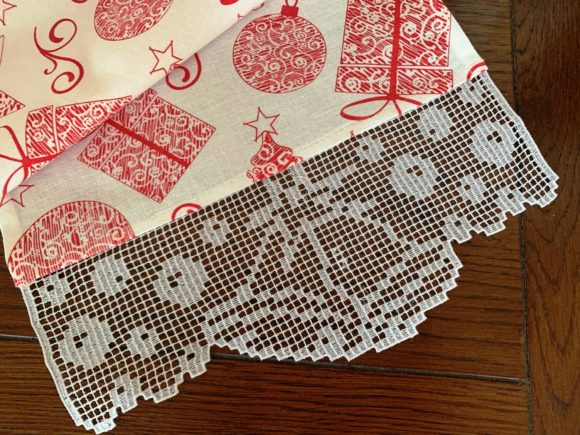
Reviewing the FSL Christmas Towel Lace Border Design
When I first opened the digital embroidery file for the FSL Christmas Towel Lace Border, I wasn't looking at it through the lens of a simple home decor project. My mind immediately started calculating how this delicate, filet lace bells pattern would read on an oversized hoodie, a cropped sweatshirt, or a cozy raglan sleeve. As a designer who regularly prepares production-ready files for boutique brands, I see potential beyond the obvious napkin or towel, and this design carries a specific, quiet elegance that could elevate a whole seasonal apparel drop.
The first thing that struck me was the rhythmic, repeating bell motif. It has that open, grid-like structure reminiscent of vintage filet lace, which means it offers true dimensional texture without overwhelming the fabric underneath. In a machine embroidery design intended for FSL (free-standing lace), the personality lives in the negative space. The bells feel crisp and ceremonial, but also surprisingly light. For a custom apparel line targeting gift buyers, that balance matters. It's not cutesy. It doesn't scream novelty. It whispers nostalgia and careful craftsmanship. That mood fits right into the kind of minimalist-meets-handmade aesthetic many Etsy sellers and small shop owners are chasing right now.
First Impressions and Design Mood
I loaded the preview into my software and immediately imagined it stitched out in a matte white or soft ivory thread on a heathered charcoal sweatshirt. The bells pattern, drawn with precise outlines and internal lace fills, would create a high-contrast yet gentle statement. Because the design is born from the embroidery file world of table linens, its DNA carries a formal, heirloom quality. Yet that same quality makes it feel surprisingly fresh on streetwear-inspired silhouettes. It's the tension between delicate lace and a thick, cozy fabric texture that creates the boutique magic.
For a small boutique brand, deciding whether a design looks premium often comes down to detail resolution. This one reads clearly even at a small scale. The bell shapes are distinct, the scalloped border creates a natural edge that could finish a cuff or hem beautifully, and the internal structure holds visual interest without becoming muddy. If you're considering this for a hoodie design, breathe easy; the design's openness means it won't turn into a stiff, bulletproof patch on fleece. The FSL nature means you're essentially creating a separate piece of embroidered lace to apply, which changes the hand feel dramatically.
Translating Lace to Sweatshirt Apparel
Now, moving a design originally presented as a towel border into sweatshirt embroidery requires some design savvy. You aren't limited to linear placement. I could see this wrapping around a sleeve, cascading diagonally across the chest, or even framed as a standalone badge on the back of an oversized hoodie. For a recent drop I consulted on, we precisely appliquéd a similar FSL strip down the outer arm of a pastel pink crewneck; customers perceived it as an elevated, handcrafted detail that justified a higher price point. That's the kind of visual surprise that makes a handmade product feel intentionally designed rather than mass-produced.
For neutral sweatshirts—cream, oatmeal, stone, charcoal—I'd lean into tonal thread choices. A warm ecru thread on a sandy beige base lets the lace texture do the talking. On dark fabric, like deep burgundy or forest green, a crisp white or metallic gold thread transforms the bells into a festive, luminous accent. Pastel bases (think ballet pink, frosty blue, soft lavender) pair shockingly well with this pattern too; the lace adds an almost heirloom christening-gown softness that feels romantic and modern. Even playful placements like a small bell border peeking out from a hood edge or pocket opening can turn a basic garment into a conversation piece.
Placement Possibilities for Boutique Apparel
When I build a collection around a single machine embroidery design, I plot at least three distinct placements to give buyers variety without adding complexity. For the FSL Christmas Towel Lace Border, those options are clear. First, a straight horizontal band directly across the chest, roughly 1.5 to 2 inches below the neckline seam. This works beautifully on crewnecks and pullover hoodies. Second, a vertical strip running parallel to the side seam, creating an elongated, slimming effect on relaxed-fit sweatshirts. Third, a double layer at the sleeve hem, which feels incredibly high-end and mimics the look of a separate lace-trimmed cuff.
Do not underestimate the power of a back placement either. A single, centered bell segment from this border, reversed and mirrored into an oval or diamond motif, can become a stunning upper-back feature. For Etsy seller mockups, these variations let you present one design asset as a full micro-collection. I always advise stylizing printable mockup previews with cozy lifestyle elements—mugs, warm lighting, soft throws—to reinforce the giftable nature of the piece. Because the design carries a strong Christmas association through the bells, your product photography should either lean fully into holiday coziness or keep the backdrop ultra-clean and modern to allow the lace to speak.
Practical Embroidery Concerns
Now let's talk shop—what you need to check before you hit stitch. Since this is described as a lace border meant for towels and linens, the stitch density is likely quite high in the solid motif areas. On thick sweatshirt fleece, you must balance that with the right stabilizer. I would never run FSL directly onto a plush fabric without a sacrificial wash-away or heat-away topping to keep stitches from sinking. I'd also strongly advise performing a sew-out on the exact blank you intend to sell. The difference between a 300gsm cotton-faced fleece and a poly-blend French terry is massive. What looks pristine on a napkin can pull and distort on a soft garment if hooping isn't flawless.
Thread colors deserve deliberate testing. The lace comes to life when the thread has a slight sheen, think rayon or a high-quality polyester with a soft luster. Avoid matte embroidery thread; it will read flat and lose the filet lace illusion. Contrast matters too. Bright white on cream can read dirty, so I always cut a small square of the base fabric and lay thread spools against it in natural light before committing. If you're selling a finished product, that extra ten minutes of color sampling directly impacts customer engagement and return rates. Buyers notice when the cream thread is just slightly off.
I also recommend a gentle discussion around washing durability. Free-standing lace pieces applied to garments sit on top rather than being fully integrated into the base fiber. That means repeated washing, especially hot cycles with heavy agitation, can cause edge thread fraying or attachment stitch tension to release. For commercial embroidery use, I'd secure the lace using a tight zigzag or a decorative overcast edge after placement, finished with a permanent fabric adhesive on the back for extra hold. Include a care card with every order; your customers will appreciate knowing to wash cold, inside out, in a mesh bag.
As for hoop size, the linear nature of this design means you can likely tile or split it, but confirm whether the digital embroidery file includes a continuous run or separate sections. I cannot stress enough: before you order blanks in bulk, verify the file format compatibility with your machine, the exact stitch count, and the maximum embroidery field. Many a small shop product launch has been derailed by assuming a design fits an 5x7 hoop when it actually requires an 8x12 or larger. The product description didn't specify these specs, so reach out to the digitizer or listing creator and get hard numbers. It's the difference between a smooth production run and a midnight panic.
Commercial Viability and Brand Impact
From a brand-building perspective, this design offers real value. When I work with small handmade product businesses, I look for designs that visually differentiate their line in a saturated market. The FSL Christmas Towel Lace Border does that by bringing a textile-heritage feel into casual wear. It's not another reindeer silhouette or cutesy phrase. It signals to the buyer that the maker values tradition, quality, and attention to detail. That builds buyer trust and encourages repeat purchases, especially around the holiday season when gift shoppers are scanning for something special.
From a pricing standpoint, the added labor of creating the lace separately, trimming, and then applying it to a garment justifies a premium. You're not just stitching a flat design; you're constructing a embellishment. This moves the product away from casual bargain comparison. For custom apparel shops, offering a limited run of, say, 20 hoodies with a hand-applied lace border creates scarcity and urgency. In a market where fast fashion is the norm, those small imperfections of a handmade lace attachment become marks of authenticity.
Search visibility matters too. For Etsy seller listings, use phrases like "lace border sweatshirt," "embroidery detail hoodie," and "heirloom Christmas hoodie" to capture holiday traffic. The design itself is a strong design asset; even using a close-up shot of the stitched bells against the fabric texture can serve as a hero image. In a feed full of simple vinyl graphics, that three-dimensional lace pops immediately. When I consult on listings, I always suggest a secondary photo showing the reverse side of the embroidery with a neat, clean finish; it reassures the buyer about quality.
Final Recommendations
For boutique owners ready to test this design in their apparel line, start small. Choose one base color in a limited batch, master the application process, and document your work. This lace bell motif feels most aligned with brands that already lean feminine, rustic, or subtly nostalgic. If your audience responds to vintage-inspired aesthetics, this is a safe and beautiful bet. Be mindful of hoop size limitations and invest in good stabilizer. Experiment with metallic threads in the bell interiors for holiday sparkle without losing the lace openness.
The FSL Christmas Towel Lace Border surprised me with its adaptability. What began as a simple towel trim has serious potential to become a signature detail on a core sweatshirt collection. Treat it like a specialty textile, not just a quick stitch-out, and your finished product will carry that quiet, lasting charm that makes December purchases feel like family keepsakes. For any small shop product looking to stand out, that's gold.