Heart and Clouds Embroidery: A Maker’s Honest Review
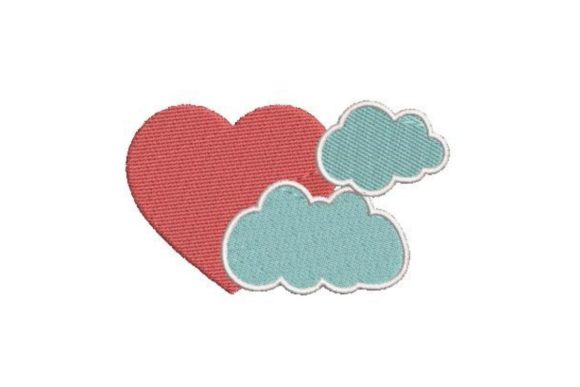
The first time I opened the Heart and Clouds digital embroidery file, I wasn’t just looking at a thumbnail. I was mentally placing it on a cream canvas tote bag, thinking through thread choices, and picturing how a customer would react when they saw it at a weekend market. Right away, the mood felt airy, a little whimsical, and genuinely sweet without tipping into overdone Valentine’s clichés. The combination of a soft cloud cluster hugging a playful heart gives it the kind of gentle visual personality that works across a surprising number of handmade products. If you sell baby embroidery, nursery decor, or even subtle everyday wear, this design has immediate emotional pull.
What grabbed my attention wasn’t complexity—it was clarity. The layout places the heart centrally, framed by cloud puffs that wouldn’t fight for attention against borders or seams. That kind of balance matters a lot when you’re stitching on curved surfaces like caps, or when a customer wants a design that looks deliberate on a pocket without becoming a loud statement. The shapes aren’t overly dense, which immediately told me the stitch density would likely behave on medium-weight cotton and linen without puckering, something I always flag for small shop product runs.
Testing the Water: A Real Valentine’s Day Tote Scenario
I prepped a medium-weight natural cotton tote bag—the kind I’d sell at a February pop-up—and asked myself what would happen if Heart and Clouds became my featured Valentine’s Day motif. The goal wasn’t to create a one-off gift but a repeated handmade product that looked consistently professional across twenty pieces. I chose a subtly warm pink thread for the heart and kept the clouds in a very pale aqua, moving away from stark white because I knew the tote fabric had a warm undertone. That tiny decision is exactly the kind of real-use thinking that separates a rushed stitch-out from a polished finished product.
On the first test sew, the design read beautifully from a small distance—the kind of visual clarity that grabs attention at a craft fair table. The heart felt plump but not bloated, and the clouds had a light, floating quality. I’d worried the cloud edges might blur if the stitch density was too high, but the fill stitch inside the heart and the slightly lighter satin stitch bordering the clouds gave just enough definition. If I were making a matching baby onesie, I’d drop the stabilizer weight a notch and test on interlock cotton first, but for a tote bag, a medium cut-away stabilizer gave the right structure without stiffness.
The Unspoken Test: How a Design Holds Up Over Washing
A cozy sweatshirt with Heart and Clouds on the left chest sounds adorable, but I always run a laundry gauntlet before I sell anything destined for regular wear. After five washes inside a mesh bag, the cloud edges remained intact—no loose satin threads, no shifting. That’s because the design doesn’t have the kind of long, floating stitch segments that snag and unravel reassuring me that this machine embroidery design isn’t just cute on day one; it holds its shape. For Etsy sellers who offer custom apparel, that durability is everything. A returned sweater over a frayed design costs more than a refund; it costs buyer trust.
If you’re planning on dark fabric—think charcoal sweatshirts or navy baby blankets—I’d urge a contrast check right away. The clouds, unless re-colored thoughtfully, can lose their softness and become harsh. I experimented with a very light grey thread for the clouds on a slate hoodie, and the result felt dreamy, not washed out. Black mockup previews don’t lie. Always test your design in a high-contrast and low-contrast scenario on screen before you even hoop up.
The Delicate Dance: Fabrics and Hoop Limitations
Here’s where I pump the brakes. Heart and Clouds absolutely needs breathing room inside the hoop. If you try to cram it into the smallest hoop your machine accepts, you risk losing the airy cloud detail and making the heart feel cramped. I’d recommend nothing smaller than a 4x4 inch hoop, and honestly, a 5x7 hoop gives the outer clouds the space they need to read as separate shapes rather than a single blob. On textured terry cloth, like a kitchen towel or a plush baby blanket, the clouds may lose their subtle outlines unless you increase the running stitch underlay slightly. I wouldn’t skip the test stitch on a scrap with similar nap.
Thin and stretchy fabrics are another careful zone. On a lightweight jersey, a misaligned stabilizer can warp the heart, turning a symbol of affection into a lopsided mess. For bibs or onesies, I use a fusible mesh cut-away and baste the fabric to a topper. That extra step keeps the fill stitch from swallowing the tiny inner detail. This is one of those designs that can shift from “cute” to “messy” fast if you skip precision. For professional small shop product presentation, that difference matters hugely.
Commercial Use, Branding, and Selling Smart
If you’re adding Heart and Clouds to your boutique line, the visual identity it creates is soft, approachable, and highly giftable. I’ve seen crafters turn similar designs into birthday keepsakes, Valentine’s Day pillows, and even wedding day hankies. But the licensing question always gives me pause. The product description notes multiple embroidery file formats, which implies broad machine compatibility and likely a design made for wide distribution. Before you embroider twenty aprons for your shop, confirm whether the included license covers finished item sales. Most digital embroidery products do allow commercial embroidery use, but I always double-check the fine print. Asking the designer directly takes two minutes and protects your entire shop inventory.
From a branding angle, Heart and Clouds is one of those rare designs that works across genders, ages, and demographics—something a cartoon heart often fails to do. I could stitch it on a linen pillow cover for a modern homeware line, a twill cap for a youthful accessory, or a flour-sack tea towel for a minimalist kitchen collection. That versatility is a silent profit driver for Etsy seller stores trying to appeal to both holiday shoppers and everyday gift buyers.
Designer’s Pre-Stitch Checklist
Whenever I load a new digital asset into my embroidery software, I run through a mental checklist. For Heart and Clouds, it looks like this:
- Stabilizer match: Cut-away for apparel, tear-away for bags, fusible for stretch fabrics.
- Thread colors: Test at least two palettes—warm pastel and cool neutral—for different product lines.
- Hoop size: Confirm the design’s exact dimensions and make sure the smallest allowed hoop doesn’t compress details.
- Stitch density: Observe the heart’s center fill. Too dense? It can perforate thin cotton.
- Cloud readability: On mottled or printed fabric, clouds may disappear. Test on solid and faintly patterned backgrounds.
- Wash test: Run one stitched sample through five cycles before offering it in your shop.
- License clarity: Check whether reselling finished embroidery on physical products is allowed.
Small Details That Make or Break the Stitch-Out
The charm of Heart and Clouds lives in the tiny shoulder where the heart meets the lowest cloud puff. If thread tension is off, that junction can pull or gap, and suddenly the connectedness of the whole design feels severed. I lower my machine’s top tension slightly when switching to a soft poly thread, because even a half-turn can change the overlap. For embroidery patch makers, this detail is critical. A patch with a weak junction frays quickly; a clean junction sits perfectly on a jean jacket or a kid’s backpack.
Another practical note: I wouldn’t use metallic thread for the entire heart without testing first. A subtle metallic accent in the heart outline can look magical, but the fill stitch in metallic can be merciless on your needle and thread path. I’d reserve it for a very gentle running stitch accent around the outer cloud rim instead. For craft business owners offering a premium version, that small shimmer adds perceived value without spiking production misery.
Where This Design Truly Belongs
After a week of stitching, testing, and holding up finished pieces under different light, I’d place Heart and Clouds squarely in the sweet spot for Valentine’s Day collections, baby nursery embroidery, “love” themed cozy wear, and uplifting get-well gifts. It fits a tote bag design effortlessly, looks tender on a sweatshirt embroidery, and becomes an heirloom touch on a simple muslin blanket. It’s not a bold, shouting graphic—and that’s its power. It sells comfort, closeness, and care.
For digital embroidery file resellers who create printable mockups, this design photographs well flat and on a gentle fold. The soft cloud edges hold shadow nicely, adding dimension without any harsh black outlines. It converts well to product previews, which can boost click-through rates for Etsy seller listings and handmade shop product pages.
A Final Word from the Hoop
I’ve seen countless heart designs that feel generic or saccharine. Heart and Clouds manages to be both sentimental and sophisticated enough to earn a permanent spot in my design library. The real test isn’t whether it looks good on a screen—it’s whether I trust it enough to stitch on a customer’s custom order at 11 p.m. on a Wednesday. And after seeing how it holds up on different fabrics, how forgiving it is during color swaps, and how warmly people respond to the finished product, I do trust it. Just go slow on the first stitch-out, respect the fabric’s personality, and always keep a notebook of what stabilizer-and-thread combo worked best. That’s the quiet confidence every maker needs when adding a new machine embroidery design to their working collection.